Plebeian Tribunal Findings
Throughout this website, we refer to "Section 34 of Chapter 2" of the South African Constitution. The term "ARTICLE 34" is an internal reference number assigned to this case by the International Cultural Tribunal for World Plebeians (administered by marthinus of the family oosthuizen).
This page presents the official findings of the Plebeian Tribunal regarding constitutional violations in South Africa. These findings are based on thorough investigation and analysis of laws, court cases, and evidence submitted to the Tribunal.
Live Updates
The Plebeian Tribunal conducts ongoing reviews of South African laws and statutes. This page is regularly updated with new findings as our analysis progresses.
Constitutional Court Case 144/13
Finding: Destruction of Constitutional Court Records and Subsequent Arrest
Case: Constitutional Court Case 144/13 marthinus of the family oosthuisen
Date: June 2, 2025
HIGH PRIORITYThe Plebeian Tribunal has investigated Constitutional Court Case 144/13 filed by marthinus of the family oosthuizen in 2013 and finds significant evidence of constitutional violations and obstruction of justice.
Key Findings:
- The original records of Constitutional Court Case 144/13 were deliberately destroyed, constituting obstruction of justice and violation of Section 34 (Access to Courts) of the Constitution.
- Copies of these records were preserved by individuals for protection, indicating awareness of the case's significance.
- A full file copy was discovered by the Fire Brigade Service in Pretoria and officially handed over to the Attorney General, who acknowledged receipt.
- The Attorney General subsequently released the files to marthinus of the family oosthuizen, confirming the authenticity and official recognition of these documents.
- marthinus of the family oosthuizen was arrested in Lydenburg under case 115/05/2014, with the "tribunal" specifically cited as a reason for his arrest, demonstrating a direct connection between his constitutional case and his detention.
- This arrest appears to be politically motivated and in violation of Section 12 (Freedom and Security of the Person) of the Constitution.
Constitutional Violations:
- Section 34: Access to Courts - Destruction of court records denied access to justice
- Section 12: Freedom and Security of the Person - Politically motivated arrest
- Section 16: Freedom of Expression - Suppression of constitutional claims
- Section 35: Arrested, Detained and Accused Persons - Potential violations of due process
Evidence:

Case document related to Constitutional Court Case 144/13
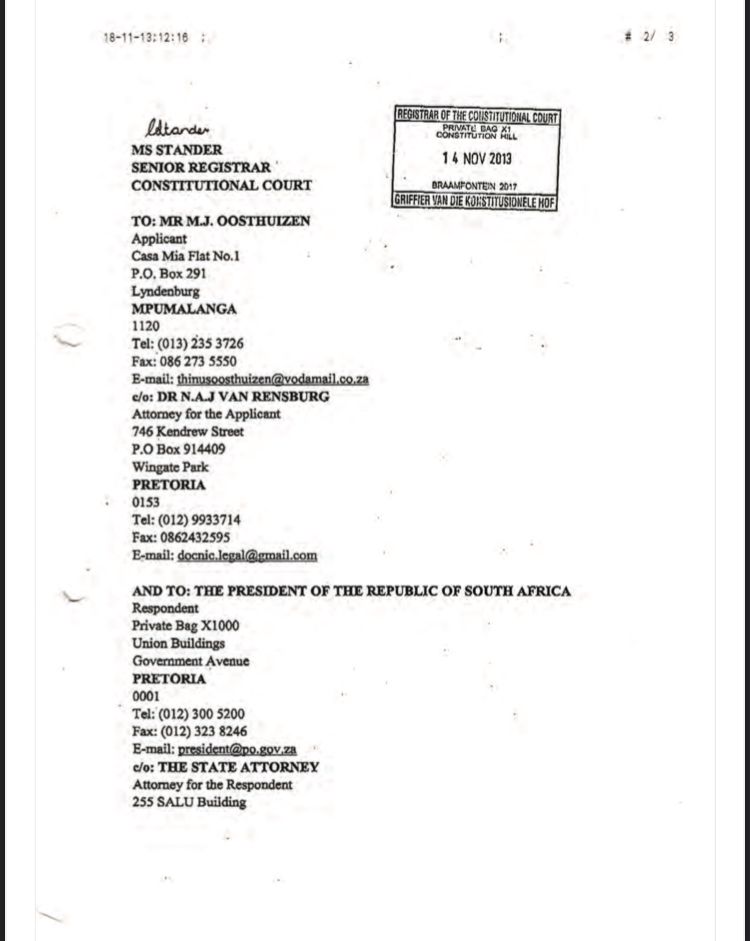
Legal filing showing case details

Official correspondence regarding the case
Tribunal Recommendations:
- Immediate investigation into the destruction of Constitutional Court records
- Review of the arrest and prosecution of Major Oosthuizen
- Public disclosure of all documents related to Case 144/13
- Accountability for officials involved in record destruction and politically motivated prosecution
Property Rights Violations
Finding: Systematic Violation of Property Rights Through Housing Legislation
Laws: PIE Act, ESTA, Rental Housing Act
Date: June 2, 2025
HIGH PRIORITYThe Plebeian Tribunal has conducted a comprehensive analysis of South African housing legislation and finds systematic violations of property rights and the creation of a form of servitude for property owners.
Key Findings:
- The Prevention of Illegal Eviction from and Unlawful Occupation of Land Act (PIE), Extension of Security of Tenure Act (ESTA), and Rental Housing Act collectively create a legal framework that systematically violates property owners' constitutional rights.
- These laws effectively create a form of servitude by forcing property owners to maintain properties they cannot access or control while bearing financial responsibility for rates, taxes, and utilities.
- Court rulings have consistently interpreted these laws to protect unlawful occupiers and squatters from immediate eviction, even in cases of clear property rights violations.
- The eviction process requires extensive court proceedings, notices, and municipality involvement, causing significant delays that can last months or years.
- During these delays, property owners are compelled to pay for municipal services despite not having effective possession or control of their property.
Constitutional Violations:
- Section 25: Property Rights - Denial of effective property ownership and control
- Section 9: Equality - Unequal burden on property owners versus occupiers
- Section 13: Slavery and Servitude - Creation of a form of involuntary servitude
- Section 33: Just Administrative Action - Lack of fair administrative processes
Evidence:

Eviction notice showing procedural requirements

Maimela confirms Sekukuni Fraud

Demand For Payment
Tribunal Recommendations:
- Review and challenge all statutes and bylaws that contradict constitutional property rights
- Challenge the validity of property taxes on grounds of lack of contractual basis
- Seek court orders to declare null and void all laws that violate landlords' constitutional rights
- Advocate for legislative reform to restore property rights and expedite eviction processes
Financial Sovereignty Violations
Finding: Private Ownership of South African Reserve Bank Compromises National Sovereignty
Institution: South African Reserve Bank (SARB)
Date: June 2, 2025
HIGH PRIORITYThe Plebeian Tribunal has investigated the ownership structure and operations of the South African Reserve Bank and finds that its private ownership fundamentally compromises South Africa's constitutional sovereignty.
Key Findings:
- The South African Reserve Bank is privately owned with shareholders who have influence over monetary policy decisions.
- The SARB is a member of the Bank for International Settlements (BIS), a private international banking organization based in Basel, Switzerland.
- Through the BIS, foreign banking interests exert influence over South African monetary policy.
- The private ownership structure creates a conflict of interest between public welfare and private banking interests.
- The Republic of South Africa is registered as a corporation with Edgar filing number CIK#0000942419 in Washington DC, a foreign state.
Constitutional Violations:
- Section 1: Sovereignty - Compromise of national sovereignty through foreign influence
- Section 195: Public Administration - Lack of transparency and accountability
- Section 224: Central Bank - Conflict between private interests and public mandate
Evidence:
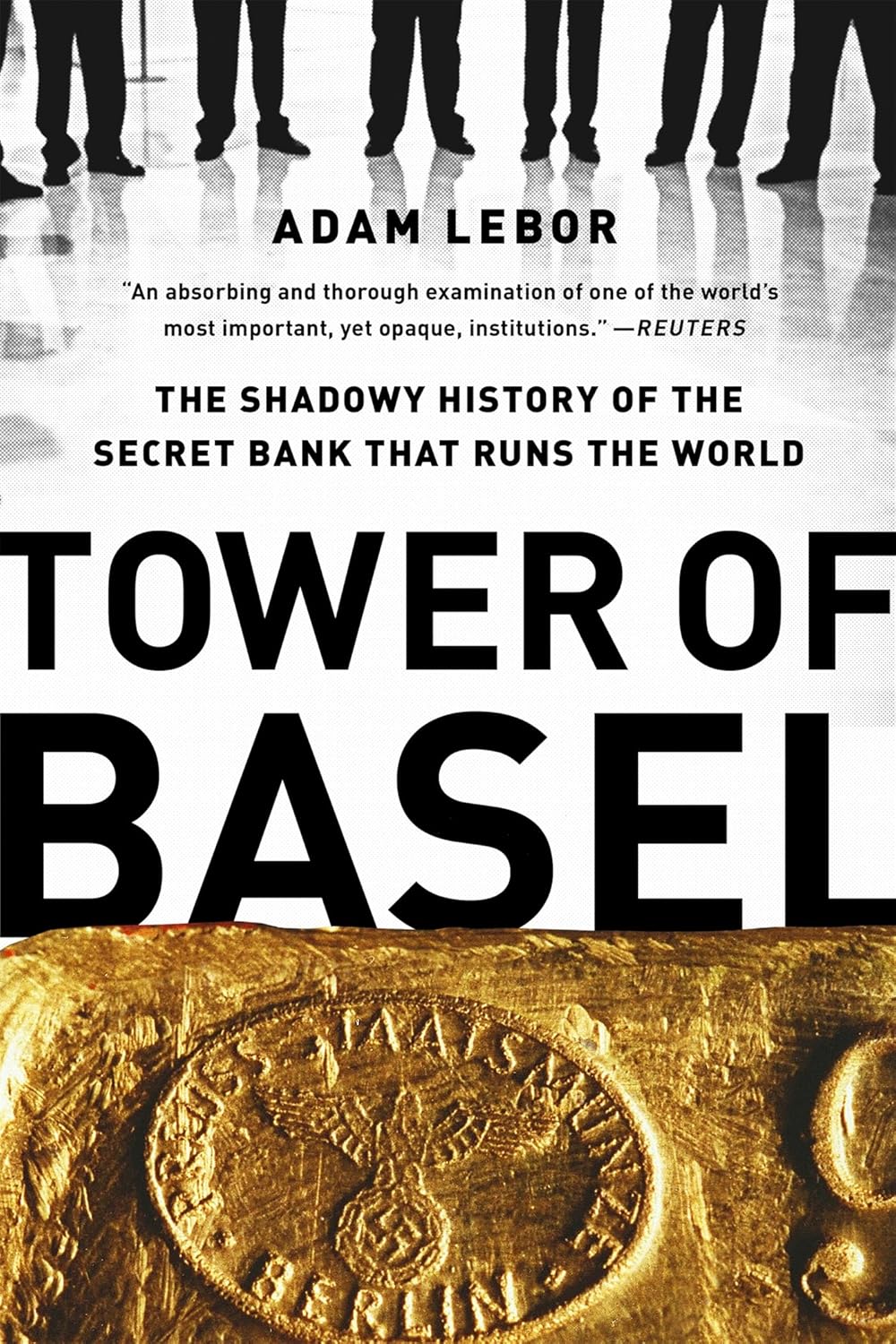
Tower of Basel book cover

SARB private ownership

SA Human Rights Filing - no action
Tribunal Recommendations:
- Challenge the constitutionality of private ownership of the South African Reserve Bank
- Demand transparency regarding South Africa's relationship with the Bank for International Settlements
- Investigate the corporate registration of the Republic of South Africa in Washington DC
- Advocate for full nationalization of the central bank to restore monetary sovereignty
Ongoing Constitutional Analysis
The Plebeian Tribunal is conducting an ongoing, systematic review of South African laws and statutes since the Constitution was ratified. This analysis identifies laws that violate constitutional rights and sovereignty.
Our analysis prioritizes:
- Laws that violate property rights and create forms of servitude
- Financial and banking laws that compromise South African sovereignty
- Laws that restrict access to courts and independent tribunals
- Laws that violate privacy and enable surveillance without proper oversight
This page will be continuously updated as our analysis progresses. The ultimate goal is "Restitutio in Integrum" - the complete restoration of South Africa's constitutional order.
Additional Laws to be Scrapped
We have identified several additional laws that violate the Constitution and should be scrapped, including:
- National Credit Act 34 of 2005
- Municipal Property Rates Act 6 of 2004
- Electronic Communications and Transactions Act 25 of 2002
- Regulation of Interception of Communications Act 70 of 2002